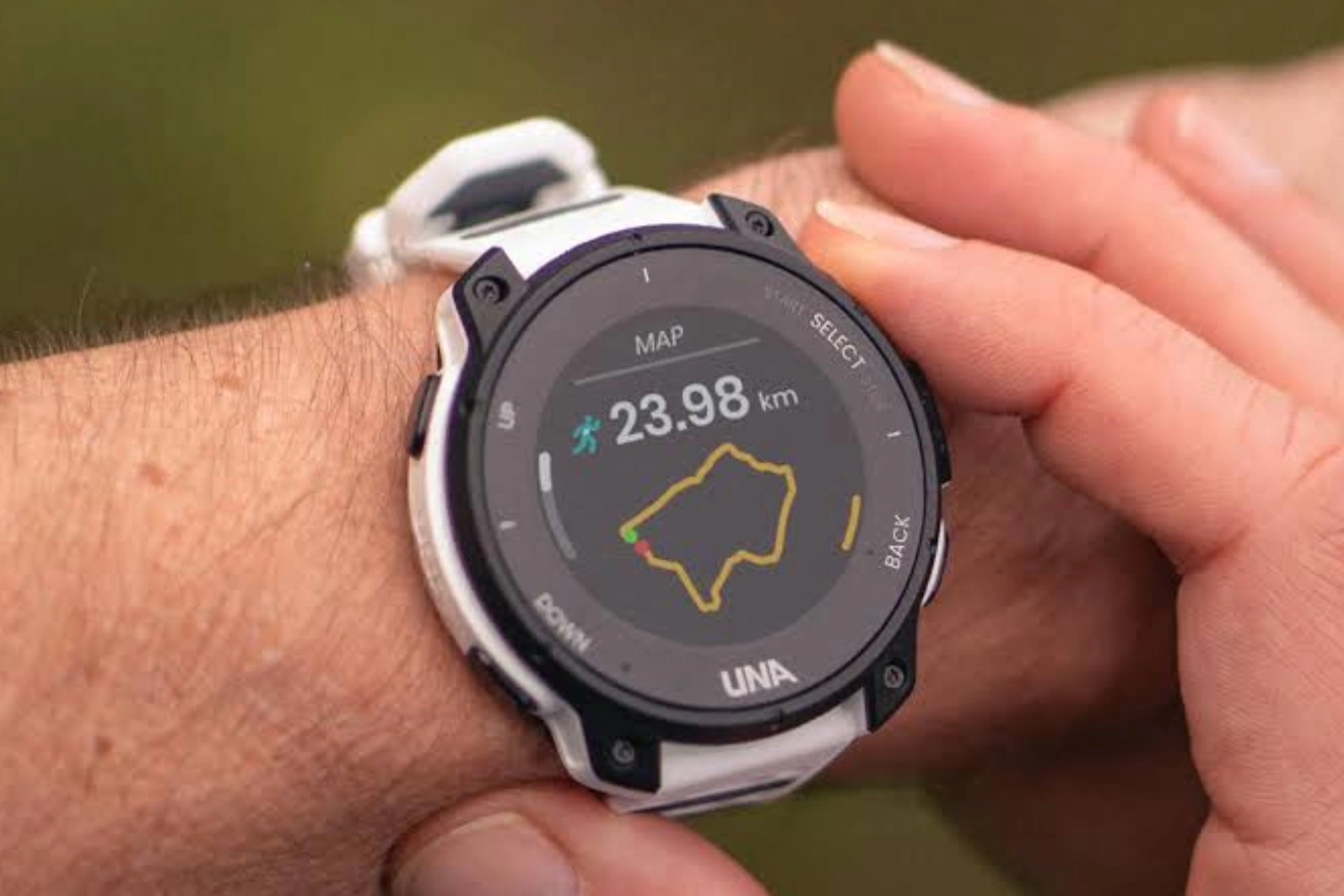
UNA Watch, the Edinburgh-founded startup building what it calls the world’s first fully modular and repairable GPS sports watch, has begun shipping the device at $199 — down from its original $350 Kickstarter price — offering up to 10 days of battery life, USB-C charging and an open-source hardware and software design.
Key Facts
- Retail price: $199, reduced from the $350 Kickstarter tier
- Up to 10 days of battery life
- Charges via standard USB-C
- IPX5 water resistance
- User-repairable and upgradable components, including battery, screen and sensors
- Open-source SDK, housing and circuit boards
- 1.2-inch MIP LCD display
What Was Announced
UNA Watch, founded by former Shot Scope CTO Lewis Allison, has moved from its original Kickstarter campaign into general retail availability, with the watch now shipping at a lower price than backers initially paid.
The Details
The core pitch is repairability: rather than replacing an entire watch when a battery degrades or a screen cracks, UNA’s modular design lets users swap individual components themselves, an approach the company says draws inspiration from Fairphone’s repairable smartphones and Framework’s modular laptops. The watch ships with a 1.2-inch MIP LCD display, up to 10 days of battery life comparable to entry Garmin Forerunner models, dual-frequency GPS, heart rate and SpO2 sensors, and IPX5 water resistance.
Beyond hardware repairability, UNA has open-sourced its SDK, housing designs and circuit boards, inviting developers to build their own apps and modifications for the device — a notably more open approach than most fitness wearable makers take. Early users cited in UNA’s own product page describe strong battery life, functional GPS tracking, but comparatively “bare bones” software at launch, with some noting slow initial GPS lock times.
Why It Matters
Right-to-repair momentum has been building steadily across consumer electronics, and wearables have remained one of the more disposable categories — most fitness watches are effectively sealed units. UNA’s approach, plus its price drop from $350 to $199, positions it as a genuine budget-friendly alternative to Garmin’s lower-end lineup for buyers who specifically value repairability and openness over deep ecosystem integration or advanced software.
What Happens Next
UNA continues to build out its software and app ecosystem post-launch, with the company positioning future updates — including more advanced health tracking, cellular connectivity and display improvements — as modular upgrades rather than reasons to buy an entirely new watch.
Sources: UNA Watch, The Verge, via Alto